
Article: Understanding Microneedling: Main Uses, Core Benefits

Understanding Microneedling: Main Uses, Core Benefits
Microneedling is a minimally invasive skin treatment that uses fine needles to create controlled micro-injuries in the top layer of skin, prompting the body to produce more collagen and elastin as it heals, leveraging the skin's natural healing process. It is also referred to as collagen induction therapy. It's most often used to soften fine lines, fade acne scars, and improve overall skin texture, and it's typically performed in a series of in-office sessions rather than as a one-and-done fix. Needle-free, at-home products inspired by the same collagen-boosting goal, such as the Dr. BRANDT Dermal Micro Points Collagen Boosting Gel, have also emerged for people who want a lower-cost, no-downtime step to add to their routine.
Key takeaways
- Microneedling is a professional procedure that uses fine needles to trigger the skin's natural collagen and elastin production, most commonly used for fine lines, acne scars, skin texture, and tone.
- Professional microneedling (also called Percutaneous Collagen Induction, or CIT) is typically done in a series of 3-6 sessions, with each session costing between $200-$700.
- At-home, needle-free products can be designed to work toward a similar visible-effect goal using different delivery mechanisms, but they are not a substitute for the in-office procedure.
- The Dr. BRANDT Dermal Micro Points Collagen Boosting Gel uses dissolving micro-spicule technology rather than metal needles, and is marketed as being inspired by the visible benefits of professional microneedling, not as equivalent to it.
- Sensitive-skin readers should patch test before trying any microneedling-inspired product, since not every formula (including this one) is recommended for sensitive skin. Others with skin conditions such as eczema and rosacea flare-ups should check with your doctor first.

The needle-free alternative
For FirmnessFor Wrinkles Dr. BRANDT Dermal Micro Points Collagen Boosting GelA collagen-boosting gel powered by Microchannel Technology: dissolving micro points instead of needles, with no downtime and no office visit.
Shop nowAdd to cartIn this article:
- What microneedling is and how it works
- What it can help improve, and what to expect from a session
- Needle-free ways to get a similar visible effect at home
- How the Dr. BRANDT Dermal Micro Points gel works
- Who should be cautious
- Frequently asked questions
What Is Microneedling and How Does It Work?
Microneedling is a minimally invasive cosmetic procedure that involves a device covered in very fine needles rolled or stamped across the skin, creating thousands of tiny, controlled punctures. Those micro-injuries signal the skin to kick off its natural wound-healing response, which stimulates collagen production and elastin, both proteins responsible for skin's firmness and elasticity, helping skin achieve a better, more resilient look over time, in step with the body's natural repair response.
The clinical name for this procedure is Percutaneous Collagen Induction, or CIT for short. CIT describes the broader induction therapy category of needle-based collagen-induction treatments, whether performed by a dermatologist, medical aesthetician, or via an approved at-home needle device. The first professional microneedling device received FDA approval in March 2018 for treating facial acne scars in adults 22 and older, with approval later expanded to include neck wrinkles. That approval history applies to the specific in-office device category; it does not extend to every product marketed with a microneedling-inspired claim, including needle-free at-home formulas.
Session length, needle depth, and the number of passes over the skin vary by provider and by what's being treated, but the underlying mechanism is consistent: create a controlled injury, let the skin's repair process do the rest, working toward the optimal results each patient is hoping for.
What Can Professional Microneedling Help Improve, and What Should You Expect From a Session?
Professional microneedling has gained popularity as one of the more versatile skin treatments available, and can be used to address various skin concerns at once rather than a single narrow complaint. It is commonly used to treat:
A single session will not deliver full results. Most providers recommend a series of three to six treatments, spaced several weeks apart, to see meaningful improvement, since collagen remodeling takes time and results build cumulatively across sessions. In-office sessions typically cost between $200 and $700 each, depending on the provider, geographic market, and area treated.
Recovery after professional microneedling is generally short but noticeable: expect redness, mild swelling, and skin sensitivity similar to a light sunburn for a few days after treatment. Because the procedure involves actual needle punctures, providers typically screen for contraindications like active acne breakouts, cold sores, a history of keloid scarring, and certain autoimmune conditions before treatment.
Key fact: In-office microneedling requires multiple sessions over weeks or months, as it is not a single-visit treatment.
What Side Effects Should You Expect From Microneedling?
Because microneedling works by creating controlled micro-injuries, some side effects are a normal part of the process rather than a sign something went wrong. The most common side effects include redness, mild swelling, and tightness for one to three days, along with pinpoint bleeding or bruising in some cases, and skin that feels sensitive to the sun for about a week afterward, which is why providers recommend diligent sun protection during recovery.
How Does Microneedling Compare to Other Skin Treatments, and When Should You See a Dermatologist?
Microneedling is one of several options in modern dermatology for addressing texture, tone, and aging concerns, and it's often discussed alongside chemical peels and dermal fillers as part of a broader skin therapy conversation. Where microneedling works by triggering the body's own repair response, chemical peels use acids to exfoliate the outer skin layers, and fillers add volume directly rather than stimulating collagen. A dermatology provider can help determine which of these skin treatments, or which combination, fits your skin goals.
Are There Needle-Free Ways to Get a Similar Visible Effect at Home?
Yes: a newer category of at-home products aims to work toward some of the same visible goals as microneedling (firmer-looking, smoother-looking skin) without using needles at all. Instead of metal needles puncturing the skin, some of these formulas rely on ingredients like dissolving microneedle-shaped particles or naturally derived exfoliating structures to temporarily affect the skin's outer layer and help active ingredients absorb more effectively.
It's worth being precise about the distinction: traditional at-home microneedling tools (like dermarollers) still use actual needles, just much shorter ones than professional devices, generally under 0.5mm, reaching only the outermost skin layer. Needle-free alternatives are a mechanistically different approach, and neither at-home category should be assumed to deliver the same depth of collagen stimulation as an in-office CIT session performed by a trained provider, which is the most minimally invasive procedure across all versions of microneedling.

How Does the Dr. Brandt Dermal Micro Points Collagen Boosting Gel Work, and How Is It Different From a Needle-Based Tool or In-Office Procedure?
The Dr. BRANDT Dermal Micro Points Collagen Boosting Gel is part of the brand's "Needles No More" collection, and it's built around what Dr. Brandt calls Microchannel Technology, a delivery system powered by naturally derived micro-spicules (sometimes called "micro points"), which leverages needle-inspired mechanics. These spicules are roughly 10 microns in diameter and 250-300 microns long, and they are not metal needles; they're derived from naturally derived material.
When massaged into clean, dry skin, the micro points are designed to work on a set timeline:
Within about 5 minutes
The spicules open temporary microchannels in the epidermis (the skin's outer layer), which brand-cited research links to better absorption of active ingredients.
Within 20-30 minutes
The spicules dissolve as they interact with the skin's natural moisture and enzymes, leaving the actives to keep working.
Within 24 hours
The spicules are described as fully breaking down into water-soluble components, without migrating into deeper skin layers.

Once those microchannels form, the gel's proprietary Skin-Lifting Complex is positioned to work alongside that improved absorption pathway. The complex is a blend of:
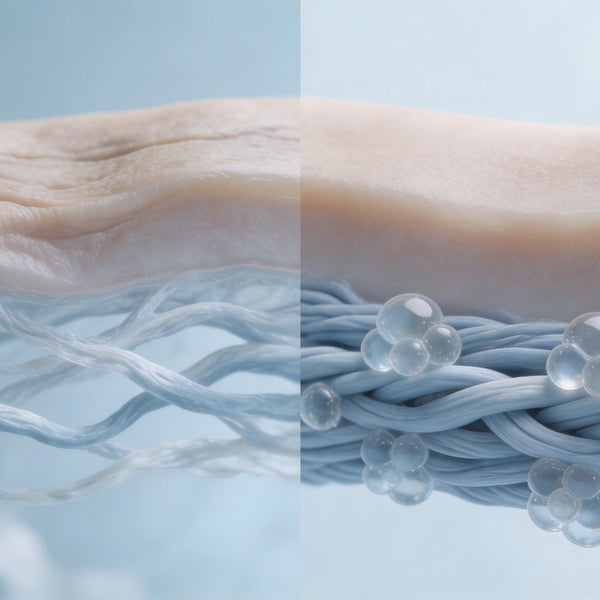

Dr. Brandt describes this product as designed to replicate the visible benefits associated with professional microneedling, such as improved elasticity, smoother-looking wrinkles, and a more youthful appearance overall, without needles, downtime, or an office visit.
In terms of the numbers Dr. Brandt has published on this product:
UP TO63%
Increase in collagen levels after 48 hours
In vitro evaluation via confocal microscopy in human fibroblasts
After 28 days of use
77%
of users reported visibly firmer skin
77%
of users reported a noticeable lift and contour
UP TO62%
reduction in wrinkle volume
UP TO53%
reduction in sagging
Self-assessment study, 30 volunteers.


Individual results may vary.
Needles No More collection
For FirmnessFor Wrinkles Dr. BRANDT Dermal Micro Points Collagen Boosting GelMassage into clean, dry skin at night. Inspired by the visible benefits of professional microneedling, without the needles.
Shop nowAdd to cartBecause the product is applied at night on clean, dry skin and massaged in until absorbed, Dr. Brandt recommends following it with a hydrating step like the Hyaluronic Face Cream, formulated with hyaluronic acid, or a Sleeping Mask and its soothing peptide formula, and suggests not using it the same night as a physical exfoliator, alternating nights instead.


Step 3 · Soothe overnight
For Damaged BarrierFor Dryness Dr. BRANDT Hydro Biotic Recovery Mask Shop nowAdd to cartKey fact: The active spicules in this product dissolve completely within about 24 hours and are not metal needles. Their benefit mainly resides in the fact that they create microchannels to boost absorption while stimulating collagen production, supporting the skin's natural renewal for smoother, firmer skin.
Who Should Be Cautious With Microneedling-Inspired Products?
Anyone considering a professional microneedling procedure should discuss contraindications with a provider first and evaluate whether they would be a good candidate for microneedling. Providers commonly flag the following as reasons to delay or avoid treatment:
- Active acne breakouts
- Cold sores
- A history of keloid scarring
- Certain autoimmune conditions
For at-home, needle-free products like the Dermal Micro Points gel specifically, sensitive skin is a meaningful consideration. Dr. Brandt's own product guidance states that this formula is not recommended for sensitive skin, and that anyone unsure whether their skin will tolerate it should perform a patch test before full application. A tingling sensation or warmth is normal — it's a sign the formula is actively working. For added comfort, follow with our Hydro Biotic Recovery Mask.

FAQ
Is at-home microneedling as effective as professional microneedling?
At-home options, whether needle-based tools with very short needles or needle-free formulas like microchannel gels, are generally positioned as a lighter-touch, more convenient step rather than a substitute for professional-grade results, particularly for deeper concerns like acne scarring or significant wrinkles. Professional CIT reaches deeper into the skin under a trained provider's supervision.
Does professional microneedling hurt?
Most providers apply a topical numbing cream before treatment, and many people describe the sensation as mild discomfort rather than significant pain. Expect some redness and sensitivity for a few days afterward, similar to a mild sunburn.
What side effects can I expect with professional microneedling?
Expect some redness, mild swelling, and skin sensitivity for a few days after treatment, similar to a mild sunburn, with occasional minor bleeding or bruising at the needle sites. If you'd rather skip the needles and the downtime altogether, Dr. BRANDT Dermal Micro Points Collagen Boosting Gel offers a liquid microneedling alternative you can use at home — it works toward similar visible-effect goals without an in-office visit or recovery time.
How many microneedling sessions do I need to see results?
Most providers recommend a series of three to six sessions, spaced several weeks apart, since collagen remodeling happens gradually over time rather than immediately after a single treatment.
Is the Dr. Brandt Dermal Micro Points Collagen Boosting Gel the same as getting microneedling done professionally?
No. It's a needle-free, at-home gel designed to work toward some of the same visible-effect goals as professional microneedling by using dissolving micro-spicule technology instead of needles. However, it is not equivalent to, and doesn't claim to replace, the in-office CIT procedure or its clinical mechanism.
Can I use this product if I have sensitive skin?
Dr. Brandt does not recommend this specific product for sensitive skin. If you have sensitive skin and are still curious, patch test on a small area first and watch how your skin responds before applying it more broadly.
Where the Dermal Micro Points Gel Fits In
If you're intrigued by microneedling's collagen-boosting premise but aren't ready for needles, downtime, or the hundred-dollar per-session cost of an in-office visit, the Dr. BRANDT Dermal Micro Points Collagen Boosting Gel offers an at-home step built around the same general goal: smoother, firmer-looking skin. It's not a swap-in replacement for professional treatment, but rather an option some people add to their nighttime routine on its own or alongside conversations with their provider about professional options. As with any new active product, start with a patch test if you have sensitive skin, and follow up with a hydrating step like the Hyaluronic Face Cream to support your skin overnight. Take the doctor home.
Ready to try microneedling in a bottle?
For FirmnessFor Wrinkles Dr. BRANDT Dermal Micro Points Collagen Boosting GelSmoother, firmer-looking skin with an at-home step you can add to your nighttime routine. Patch test first if you have sensitive skin.
Shop nowAdd to cart

Leave a comment
This site is protected by hCaptcha and the hCaptcha Privacy Policy and Terms of Service apply.