
Peptide Serum for Wrinkles: Clinical Results at Home
A peptide serum for wrinkles is a concentrated formula that uses short chains of amino acids to support collagen production, smooth fine lines, and improve skin firmness. These serums work by signaling your skin to renew itself, mimicking the body's natural repair processes without invasive procedures.
This article is for anyone researching peptide-based solutions for visible aging, whether you're comparing ingredients, evaluating product claims, or building a longevity-focused routine. You'll learn which peptides deliver measurable results, how they compare to other wrinkle treatments, and how to incorporate them into your regimen.
-
What peptides are and how they address wrinkles at the cellular level
-
Which peptide types deliver clinically tested results for lines and firmness
-
How peptide serums compare to retinol and other wrinkle treatments
-
How to apply peptide formulas for maximum efficacy
-
What to expect from peptide use over time
What Are Peptides and How Do They Reduce Wrinkles?
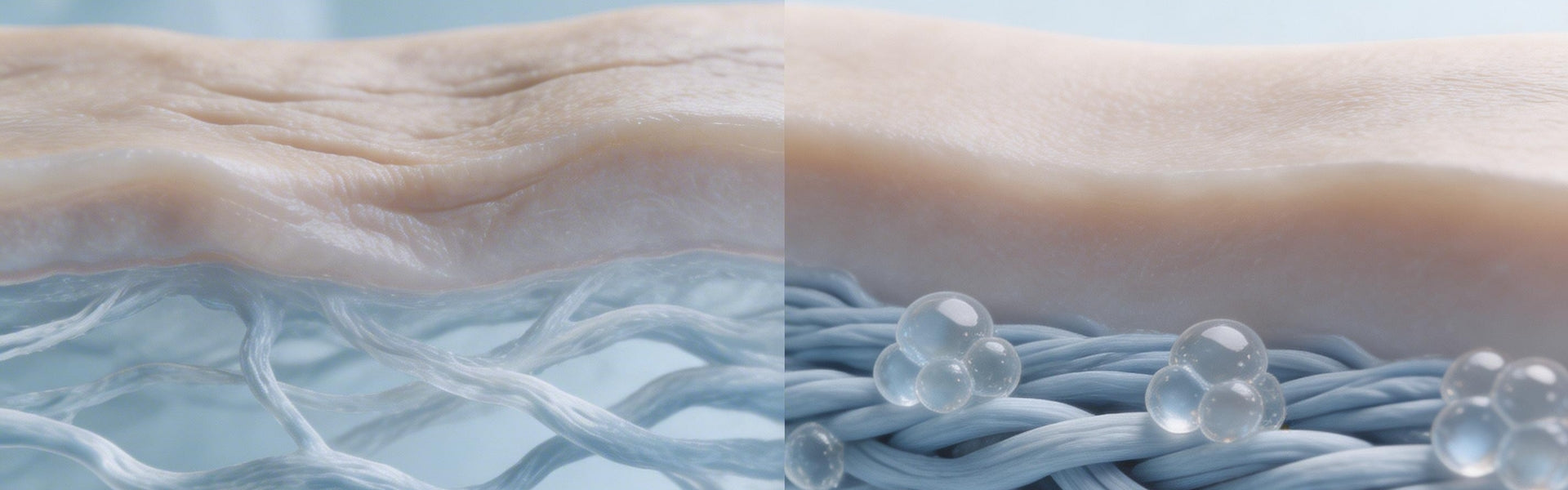
Peptides are short chains of amino acids that act as messengers in your skin. When you apply a peptide skincare serum to your face, these molecules signal fibroblasts to produce more collagen and elastin, the structural proteins that keep skin firm and smooth. As collagen production declines with age, wrinkles deepen, and skin loses volume. Peptides help counteract this decline by encouraging your skin to behave as it did when it was younger.
The most studied peptides for wrinkles include signal peptides such as Palmitoyl Tripeptide-1 and Palmitoyl Tetrapeptide-7, which stimulate collagen synthesis, and neurotransmitter peptides such as Acetyl Hexapeptide-8, which relax facial muscles to soften expression lines. Copper peptides, particularly Copper Tripeptide-1 (GHK-Cu), support wound healing and tissue remodeling, making them effective for both fine lines and skin texture. These ingredients work differently from exfoliants or moisturizers. They don't just hydrate or resurface; they actively influence how your skin rebuilds itself.
Dr. BRANDT® has spent 30 years translating in-office dermatological science into at-home formulas. Our approach to peptides reflects this clinical heritage. We don't rely on single-ingredient hype. We engineer peptide complexes that work synergistically with other tested actives to deliver results you can see and measure.
Why Peptide Serums Are Gaining Traction in 2026
Peptide technology has shifted from niche to mainstream as consumers demand proof over promises. In 2026, peptides are no longer positioned solely as wrinkle fighters. They're now central to prevention, barrier support, and skin longevity strategies. Recent trend reporting highlights functional peptides alongside ingredients such as NAD+, ceramides, and postbiotics as part of a broader shift toward cellular health and long-term maintenance.
This shift reflects a change in how people think about aging. Rather than waiting for wrinkles to appear and then treating them, more consumers are adopting preventative routines in their 20s and 30s. Peptides fit this approach because they support the skin's natural repair processes without the irritation or downtime associated with stronger interventions. One 2026 men's skincare article noted that 80% of adults are now taking a preventive approach to skincare, which helps explain why peptide skincare is selling across age groups and genders.
The demand for clinical efficacy has also risen. Buyers want lightweight, water-based serums with tested ingredients, not fragrance-led products with vague claims. Formulations built around Palmitoyl Tripeptide-1, Palmitoyl Tetrapeptide-7, and Acetyl Hexapeptide-8 are now considered standard in peptide wrinkle serums, often paired with hydrators such as hyaluronic acid, niacinamide, and glycerin to strengthen the skin barrier and address lines.
Which Peptide Types Work Best for Wrinkles?
Signal Peptides for Collagen Production
Signal peptides such as Palmitoyl Tripeptide-1 and Palmitoyl Tetrapeptide-7 are among the most studied for wrinkle reduction. These peptides stimulate collagen synthesis by mimicking the breakdown products of damaged collagen, thereby tricking fibroblasts into producing more collagen. Clinical studies have shown that topical application of these peptides can improve skin firmness and reduce the appearance of fine lines over 8 to 12 weeks.
When you're evaluating a peptide serum, look for formulas that combine multiple signal peptides rather than relying on a single ingredient. This multi-peptide approach allows you to target different aspects of collagen production and skin repair simultaneously. The best peptide serums for wrinkles layer these actives with barrier-supporting ingredients to ensure the peptides penetrate effectively.
Neurotransmitter Peptides for Expression Lines
Acetyl Hexapeptide-8, often marketed under the name Argireline, is a neurotransmitter peptide that works differently from signal peptides. It inhibits the release of neurotransmitters that cause facial muscles to contract, which softens expression lines around the eyes and forehead. Think of it as a topical alternative to injectables, though the effect is gentler and temporary.
Neurotransmitter peptides won't erase deep wrinkles, but they can reduce the depth of lines caused by repeated facial movements. This makes them particularly useful for crow's feet and forehead lines. When combined with signal peptides in a lifting serum, they address both the structural and dynamic causes of wrinkles.
Copper Peptides for Skin Renewal
Copper Tripeptide-1 (GHK-Cu) is one of the most versatile peptides in skin care. It supports collagen and elastin production, promotes wound healing, and has antioxidant properties. Copper peptides are especially effective at improving skin texture and reducing the appearance of deeper wrinkles by promoting cellular-level tissue remodeling.
However, copper peptides can be tricky to formulate. They're sensitive to pH and can degrade in the presence of certain ingredients. When you're shopping for a copper peptide serum, choose brands with a track record in clinical formulation. Dr. BRANDT® has been engineering peptide complexes since the 1990s, and our formulas are designed to keep these sensitive actives stable and effective through the last drop.
How Does a Peptide Serum for Wrinkles Compare to Retinol?
Retinol remains the gold standard for wrinkle reduction, but it's not the right choice for everyone. Retinol works by increasing cell turnover and stimulating collagen production, but it can cause irritation, dryness, and photosensitivity, especially in sensitive or melanin-rich skin. Peptides offer a gentler alternative that still delivers measurable results for fine lines and firmness.
The key difference is the mechanism. Retinol prompts your skin to shed dead skin cells and produce new ones more quickly, which can lead to flaking and redness during the adjustment period. Peptides, by contrast, work with your skin's existing repair processes. They signal collagen production without disrupting the skin barrier or causing inflammation. This makes peptide serums a better option for people with sensitive skin, rosacea, or those who can't tolerate retinoids.
That said, retinol and peptides are not mutually exclusive. Many dermatologists recommend using both in a layered routine: retinol at night for cell turnover and peptides in the morning to support collagen synthesis and protect the skin barrier. If you're new to active ingredients, starting with a peptide serum lets you build tolerance before introducing stronger treatments. Dr. BRANDT®'s Anti-Wrinkle Peptide Skincare is formulated to work alongside other actives, so you can customize your routine without worrying about ingredient conflicts.
What to Look for in a Peptide Serum for Deep Wrinkles
Not all peptide serums are created equal. If you're targeting deep wrinkles rather than fine lines, you need a formula with a high concentration of active peptides, not just a trace amount added for marketing purposes. Look for products that list peptides in the first half of the ingredient list, which indicates a meaningful concentration.
The best peptide serums for deep wrinkles combine multiple peptide types to address different aging mechanisms. A formula with both signal peptides (for collagen production) and copper peptides (for tissue remodeling) will deliver more visible results than a single-peptide product. You should also see supporting ingredients like hyaluronic acid to maintain moisture levels, niacinamide to strengthen the skin barrier, and antioxidants to protect against environmental damage.
Texture matters too. Lightweight, water-based serums absorb quickly and layer well under moisturizer and sunscreen. Avoid thick, silicone-heavy formulas that sit on the skin's surface; they may feel luxurious, but they don't allow peptides to penetrate effectively. Dr. BRANDT®'s approach to peptide formulation prioritizes bioavailability. We engineer our serums to deliver actives where they're needed, not just where they feel good.
How to Apply Peptide Serums for Maximum Efficacy
Applying a peptide serum correctly makes a difference in how well it works. Start with clean, dry skin. Cleanse your face and neck, then wait a minute or two for your skin to fully dry. Peptides penetrate best into dry skin because water can dilute their concentration and reduce their efficacy.
Dispense 2 to 3 drops of serum onto your palm and gently press it into your face, neck, and décolletage. Don't rub aggressively. Peptides are delicate molecules, and rough application can break them down before they reach the deeper layers of your skin. Focus on areas where wrinkles are most visible: around the eyes, between the brows, along the nasolabial folds, and on the forehead.
Follow with a moisturizer to lock in the serum and support your skin barrier. If you're using peptides in the morning, always apply sunscreen as the final step. Peptides don't increase photosensitivity the way retinol does, but UV exposure breaks down collagen faster than your skin can rebuild it. Consistent sun protection is non-negotiable if you want peptide serums to deliver long-term results.
What Results Can You Expect from Peptide Serums?
Peptides are not instant gratification ingredients. You won't see results overnight, and anyone who promises otherwise is overselling. Most clinical studies on peptides show measurable improvements in fine lines, firmness, and skin texture after 8 to 12 weeks of consistent use. Some users notice smoother skin and improved hydration within the first month, but deeper wrinkles take longer to respond.
The results you see depend on several factors: your age, the depth of your wrinkles, your overall skin care routine, and how consistently you apply the serum. Peptides work best as part of a complete regimen that includes sunscreen, hydration, and barrier support. They're not a standalone solution, but they're a powerful tool when used correctly.
One 2026 study cited in anti-aging coverage claimed that a peptide-containing regimen reduced epigenetic skin age by up to eight years in three months. While that claim is specific to a branded product and not independently verified, it reflects the growing body of evidence that peptides can deliver measurable changes in skin firmness, wrinkles, texture, and elasticity when properly formulated and tested.
Can You Use Peptide Serums with Other Actives?
Yes, and in most cases, you should. Peptides play well with nearly every other category of active ingredient. You can layer them with hyaluronic acid for hydration, niacinamide for barrier support, vitamin C for antioxidant protection, and even retinol for enhanced collagen stimulation. The key is to apply them in the right order: thinnest to thickest, water-based before oil-based.
One exception: avoid using peptides at the same time as strong acids like glycolic or salicylic acid. High-acid formulas can denature peptides, breaking them down before they have a chance to work. If you're using a chemical exfoliant, apply it at night and save your peptide serum for the morning, or alternate nights.
How Peptide Serums Fit into a Skin Longevity Routine
Skin longevity is about more than wrinkle reduction. It's about maintaining barrier function, supporting cellular repair, and protecting against environmental stressors over the long term. Peptides fit this philosophy because they reinforce your skin's natural ability to renew itself rather than forcing change through irritation or inflammation.
A longevity-focused routine built around peptides might include a gentle cleanser, a peptide serum, a barrier-supporting moisturizer with ceramides or beta-glucan, and a broad-spectrum sunscreen. At night, you might add a retinol or resurfacing treatment to complement the peptide's collagen-building effects. The goal is consistency, not complexity. Simple routines performed daily outperform elaborate regimens that you abandon after two weeks.
Dr. BRANDT®'s Skin-Body-Mind philosophy connects skin health to physical, emotional, and lifestyle wellbeing. We don't just formulate products; we think about how they fit into your life. Peptide serums are part of that approach because they deliver professional-grade results without the downtime, irritation, or complexity of in-office procedures. You take the dermatologist home, and you do it on your terms.
Why Vegan and Cruelty-Free Peptide Formulas Matter
Peptides used in skin care are synthesized in labs rather than derived from animal sources, making them inherently vegan-friendly. However, not all peptide serums are formulated with ethical sourcing and cruelty-free testing across the entire product. If you prioritize clean, conscious beauty, look for brands that commit to vegan formulations and third-party cruelty-free certification.
Dr. BRANDT® is cruelty-free. Every formula we create is tested for safety and efficacy without animal testing, and we source ingredients that align with our commitment to ethical skincare. You don't have to compromise your values to get clinical results. Our peptide serums deliver the same level of performance you'd expect from a dermatologist's office, with the transparency and integrity you expect from a brand that respects both your skin and your principles.
Frequently Asked Questions
What is the best peptide serum for wrinkles?
The best peptide serum for wrinkles combines multiple peptide types, including signal peptides like Palmitoyl Tripeptide-1 and copper peptides like GHK-Cu, with barrier-supporting ingredients such as hyaluronic acid and niacinamide.
Is peptide serum good for wrinkles?
Yes, peptide serums are effective for wrinkles because they signal your skin to produce more collagen and elastin, the structural proteins that keep skin firm and smooth. Clinical studies show that consistent use of peptide serums over 8 to 12 weeks can reduce the appearance of fine lines and improve skin firmness. They're especially useful for people with sensitive skin who can't tolerate retinol.
What peptide will help with wrinkles?
Palmitoyl Tripeptide-1, Palmitoyl Tetrapeptide-7, Acetyl Hexapeptide-8, and Copper Tripeptide-1 are the most studied peptides for wrinkle reduction. Signal peptides stimulate collagen production, neurotransmitter peptides relax expression lines, and copper peptides support tissue remodeling. The most effective peptide serums combine multiple types to address different aging mechanisms simultaneously.
Is retinol or peptides better for wrinkles?
Retinol is more potent for deep wrinkles and hyperpigmentation, but it can cause irritation, dryness, and photosensitivity. Peptides offer a gentler alternative that still delivers measurable results for fine lines and firmness without disrupting the skin barrier. Many dermatologists recommend using both retinol at night for cell turnover and peptides in the morning for collagen support and barrier protection.
See the Science Behind Dr. BRANDT® Peptide Formulas
Peptide serums work when they're formulated correctly, tested rigorously, and applied consistently. You don't need a complicated routine or a medicine cabinet full of products. You need a clinically tested peptide complex that addresses collagen production, barrier support, and skin renewal in one step.
Dr. BRANDT® has spent 30 years engineering dermaceutical formulas that bring in-office results home. Our P-Tiox Anti-Wrinkle Peptide Serum combines signal peptides, neurotransmitter peptides, and barrier-supporting actives in a lightweight, fast-absorbing formula that works across all skin tones, types, and genders. Explore clinically tested peptide formulas designed by dermatologists who understand how skin ages and what it takes to slow that process down.

Leave a comment
This site is protected by hCaptcha and the hCaptcha Privacy Policy and Terms of Service apply.