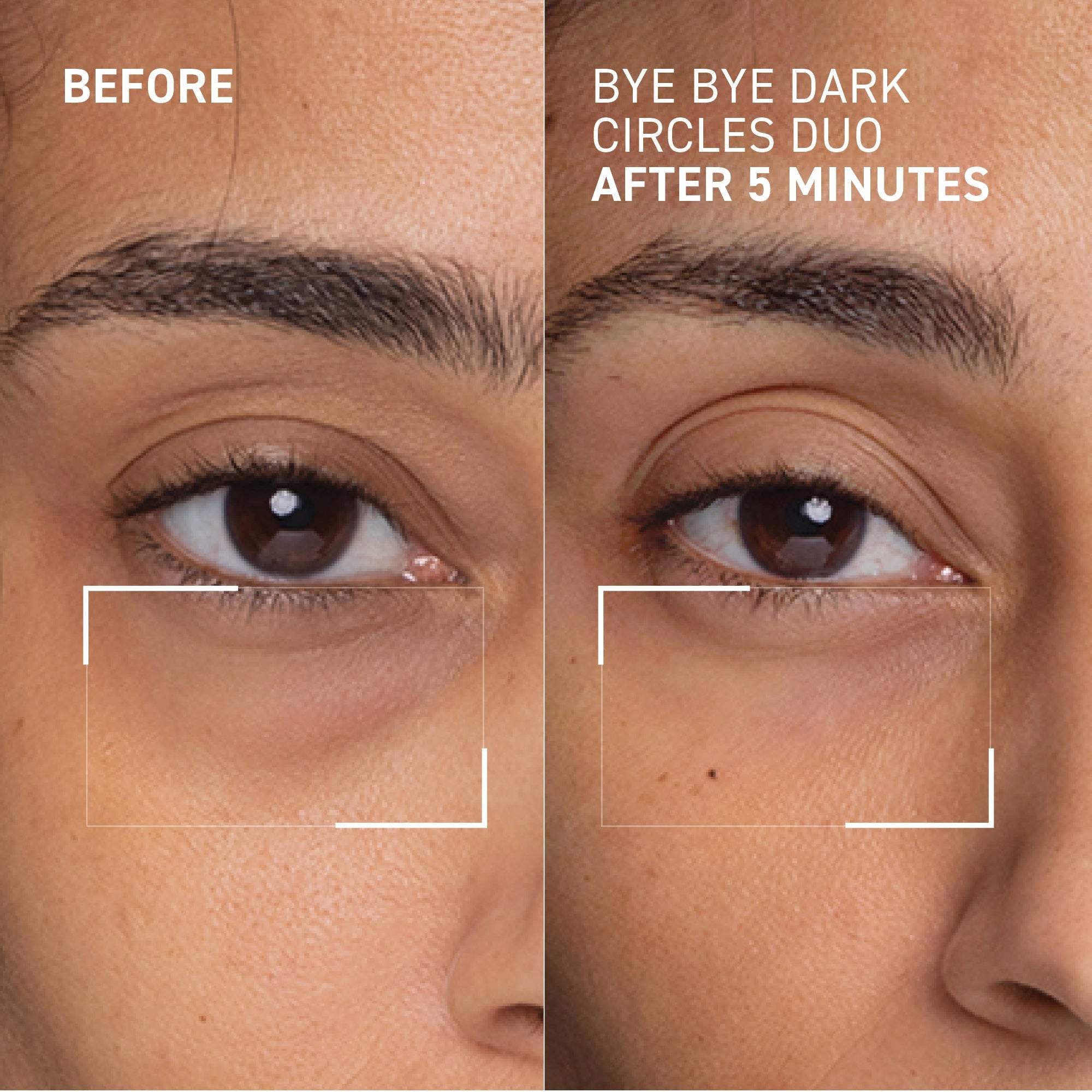
Color Corrector for Dark Circles That Works
A color corrector neutralizes the blue, purple, or brown tones that cause dark circles to show through makeup. You apply it before concealer to cancel out discoloration at the source. Our formulas are clinically tested to work on all skin tones without oxidizing or creasing throughout the day.
How Color Correcting Targets Under-Eye Circles
Color theory drives corrector performance. Peach and orange shades neutralize blue and purple undertones common in fair to medium skin. Deeper peach and red-orange correct the brown and gray tones visible in melanin-rich skin. A corrector stick or corrector concealer hybrid delivers concentrated color exactly where you need coverage without disturbing the delicate eye area, though pairing it with a dark circle eye cream provides long-term improvement.
Choosing the Right Corrector Shade
Match your corrector to your specific dark circle tone, not your skin tone. Blue or purple circles respond to peach. Brown circles need orange or red-orange. Green circles from veins require a pink corrector. The correct palette includes shades for light skin through deep skin tones, so you can address discoloration without guessing—or pair your corrector with a best-reviewed eye cream for enhanced results.
Related Collections: Face Serum, Eye Blackness, Skin Care, Neck Cream
Corrector Concealer Application Order
Apply eye corrector first, then concealer, then foundation if you use it. This layering sequence lets the corrector neutralize discoloration before you add coverage. Pat the corrector gently onto the darkest areas only. Blend the edges, then apply your regular concealer over the top for a natural finish.
Color Correctors for All Skin Tones
Our formulas are tested across the full spectrum of skin tones to confirm they don't turn gray or ashy. Fair skin benefits from light peach. Medium skin needs deeper peach or bisque. Melanin-rich skin requires orange or red-orange to effectively cancel brown and gray undertones. Every corrector is vegan and cruelty-free.
Corrector Stick Versus Liquid Formula
A corrector stick offers precision and portability. You control exactly where the color goes, which matters when you're targeting a small area like the inner corner of the eye. Liquid formulas blend more easily but require a brush or fingertip for application. Both formats deliver the same color correction when matched to your dark circle tone.
Best Color Corrector for Dark Circles
The best color corrector for dark circles combines the right shade with a formula that doesn't migrate or oxidize. Look for ingredients that hydrate the thin under-eye skin while delivering concentrated color. Clinically tested formulas ensure the corrector performs consistently across different skin types and environmental conditions.
Circle Corrector Ingredients That Matter
Hydrating ingredients like hyaluronic acid and glycerin prevent the corrector from settling into fine lines. Silica and mica provide buildable coverage without heaviness. Antioxidants protect the delicate eye area from environmental stress. Our formulas exclude parabens, sulfates, and phthalates while maintaining clinical performance standards.
Dark Circle Causes and Solutions
Genetics, thinning skin, and visible blood vessels create the appearance of dark circles. Lack of sleep intensifies discoloration by dilating blood vessels and increasing fluid retention. A color corrector addresses the visible symptom while you work on the underlying cause. Consistent use of eye care formulas can improve skin thickness over time.
Makeup Techniques for Better Coverage
Prep skin with a concealing eye cream before applying any makeup. Let it absorb for two minutes. Apply corrector in a triangle shape from the inner corner to the outer corner, extending slightly below the darkest area. Pat concealer over the corrector using a damp beauty sponge for seamless blending. Set with a light dusting of translucent powder only if needed.
Color Corrector Versus Concealer Alone
Concealer adds coverage but can't neutralize opposite colors on the color wheel. If you layer concealer over blue circles without correcting first, you need more product to achieve opacity. That extra weight settles into fine lines and looks cakey. A thin layer of corrector plus a thin layer of concealer creates better coverage with less product and a more natural finish.
Foundation Under Your Eyes
You don't need foundation under your eyes if you've used corrector and concealer correctly. Foundation can emphasize texture and fine lines in this area. If you prefer full-face foundation, apply it first, then add corrector and concealer only where you still see discoloration. This approach uses less product and looks more skin-like.
Corrector for Mature Skin
Mature skin requires formulas that won't settle into fine lines or emphasize texture. Choose a corrector with a creamy, hydrating base that moves with your skin. Avoid formulas with heavy waxes or thick textures. Pat product gently rather than rubbing to prevent tugging on delicate skin. Set with minimal powder or skip powder entirely for a fresh, dewy finish.
Expert-Developed Color Correction
Our color corrector formulas are developed alongside Miami's top dermatology and beauty experts. Each shade is tested clinically to confirm it neutralizes discoloration without oxidizing or shifting color throughout wear. We formulate for all skin tones, all genders, and all skin types. Every product reflects 30+ years of integrative dermatology expertise.
Take the Dermatologist Home
Explore clinically tested color correctors that deliver visible results. Shop formulas developed by experts who understand skin science and color theory. See the difference expert-developed makeup makes in your daily routine.